Camping with dogs

Camping 1

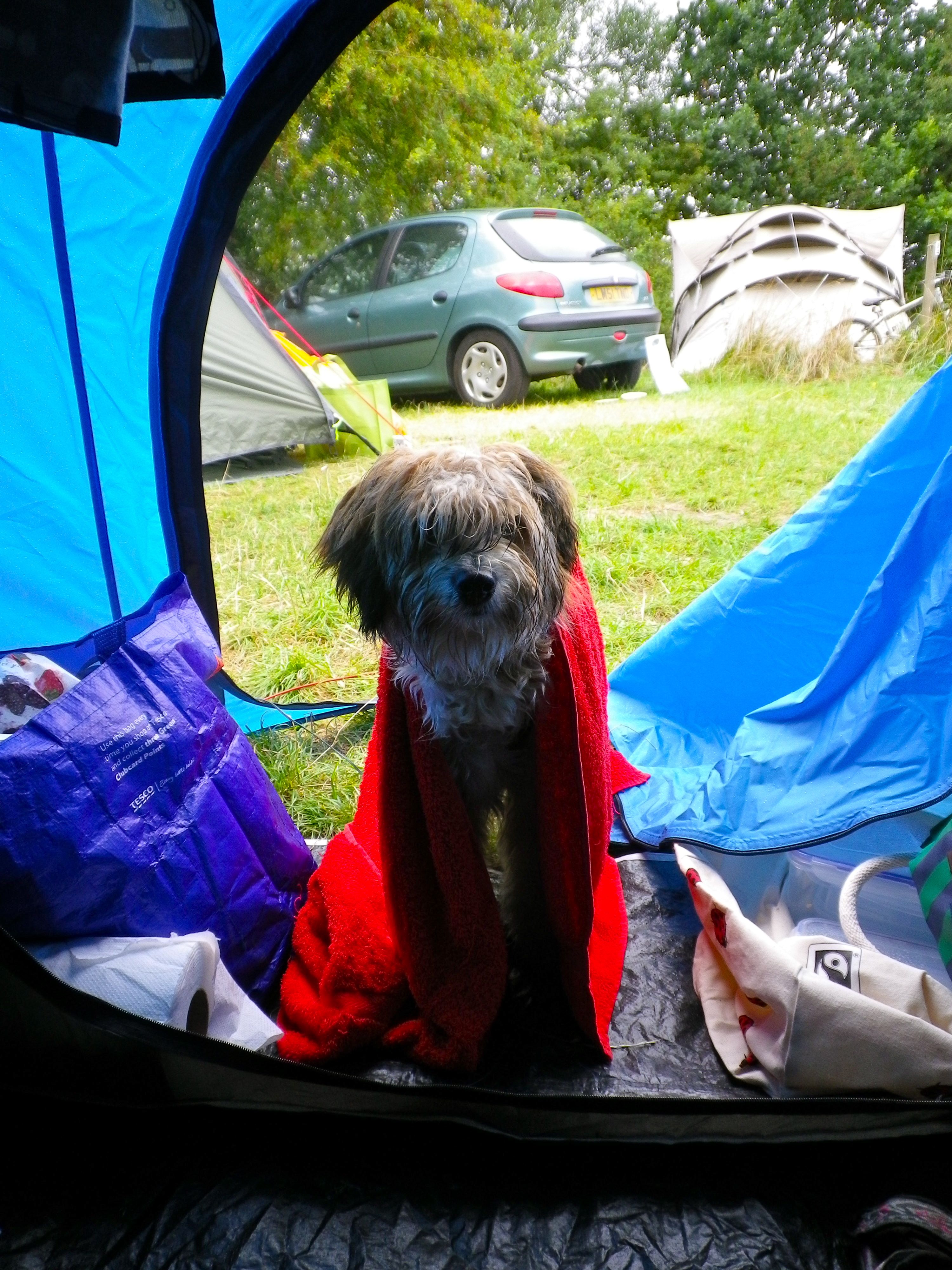
“It’s wet out there!”
Bring enough towels to cope with a wet, muddy dog.

Wild camping is a rare thing to find in the UK. Most of the time we are on organised camp sites with clean toilet blocks and hot showers so we don’t have to worry about finding enough clean water to drink or kindling for a campfire. If you manage to find one which also allows you to bring your canine friends, you’ll need to pack a few doggy necessities as well.

Even dog-friendly sites do not welcome dogs off leash, so you’ll need a way to tie out your dog so he is not off raiding other campers’ kitchens. Well-seasoned campers will often fence out a ‘garden’ using wind-breaks or netting. On a lesser scale you can purchase a purpose-made plastic covered cable and spiral stake which will withstand the chewing of a frustrated dog. I’ve found that the cable works well but the stake can be hard to fully screw into hard ground and will be totally bent out of shape by a lively, excited dog. On my last couple of excursions I have lashed together a couple of leads or used a long line attached to a plastic tent peg walloped hard into the ground. This was especially effective when used on sandy ground on the north Norfolk coast.

Next, Fido will need somewhere to sleep. If you’ve ever camped, you will know that a lot of cold comes up from the ground and night temperatures can plummet as soon as the clouds clear. Despite providing a lovely memory foam pad for Lola, she still chose the middle of my sleep mat to nest in. Luckily the extra roomy sleeping bag allowed us to snuggle up for warmth.

We’ve managed to get out to a couple of sites without a car, which means packing fairly light, but never with anything smaller than a 3-man tent. You will need some extra space for those times that your dog is wet, muddy or having a mad moment.

Here are some other ideas to consider.

  • Make sure your dog is chipped and that your phone and address details are up to date on the company’s database.
  • Make sure you have the contact details, opening hours and out-of-hours number for the local Veterinary Surgery.
  • Dog mat and bedding.
  • Dog food and treats.
  • Food and water bowls.
  • Water bottle for excursions.
  • Of course your dog will be wearing a collar and leash, but a spare leash is useful.
  • Tie-out cable and stake.
  • Dog towel and grooming brush/comb (for getting rid of burrs). I find disposable micro-fibre cloths very useful for squee-geeing off excess water before toweling.
  • Dog toys and chews (rawhide or stag bar).
  • Dog coat or jumper, depending on the weather. If your dog is lying quietly outside for long periods he can get cold.
  • Lots of poo bags.
  • Tick tweezers are useful in areas where Lyme disease is a danger.
  • A water carrier is a good idea for rinsing mud and sand off your dog if the campsite does not have a hose handy.
Camping 2

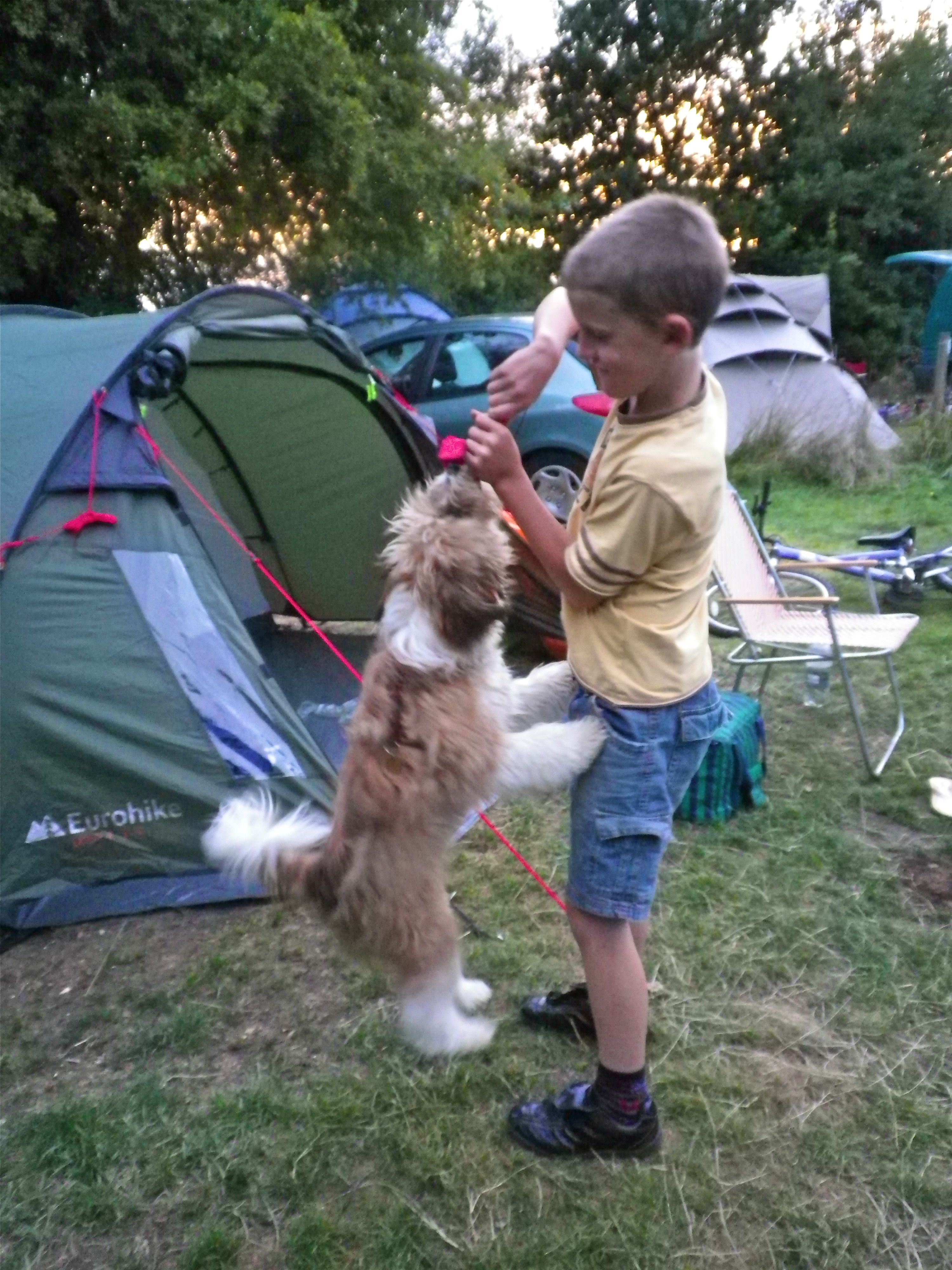
Lola sporting that jumper and harness combo. Other vital items in the picture? Dog toy, tie out leash and poo bag!
Camping 3

A friendly pup can also be an asset to other holidaying families.
Posted in Uncategorized | Tagged , , , , | Leave a comment

Holiday Time

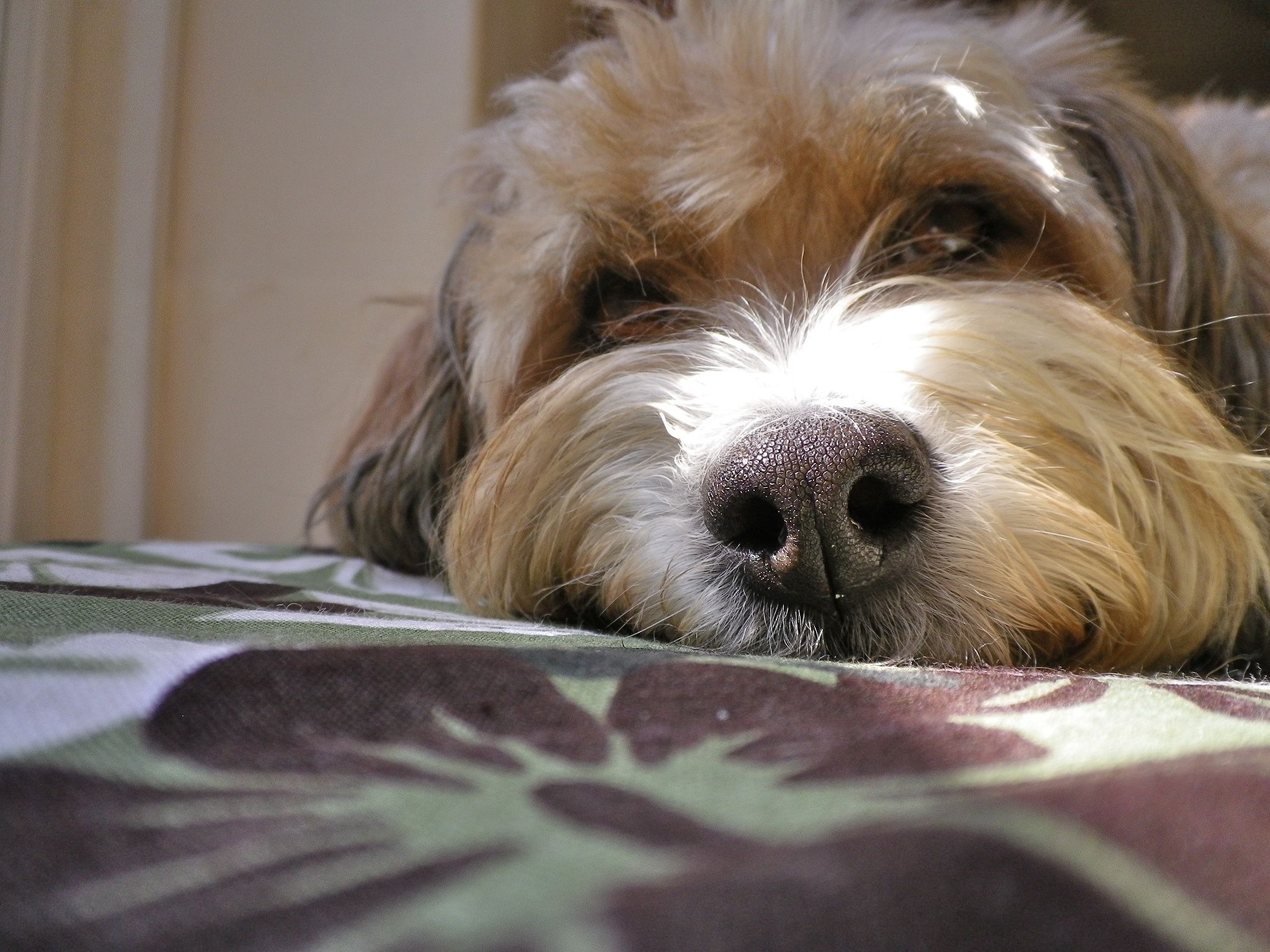
Big nose

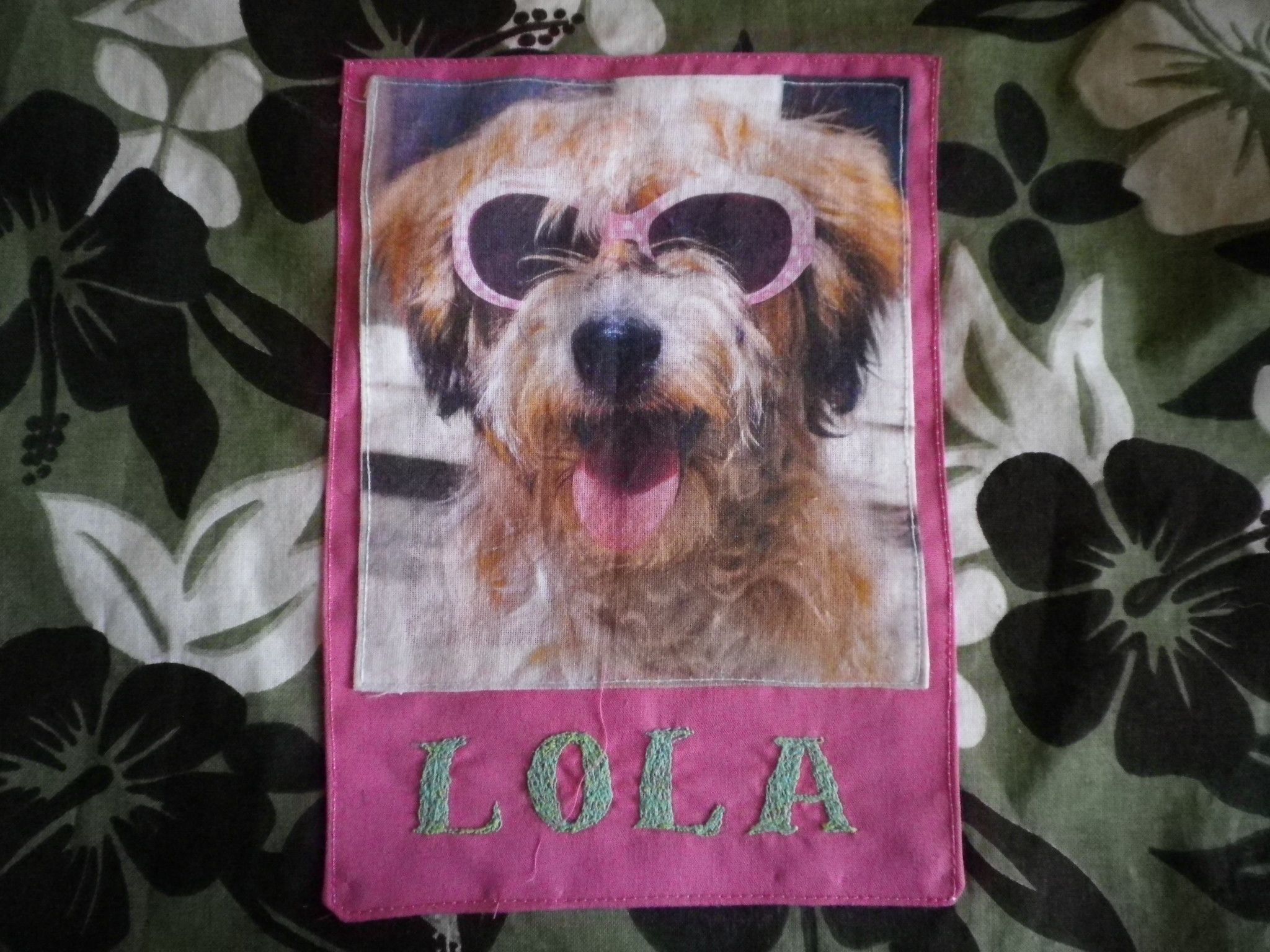
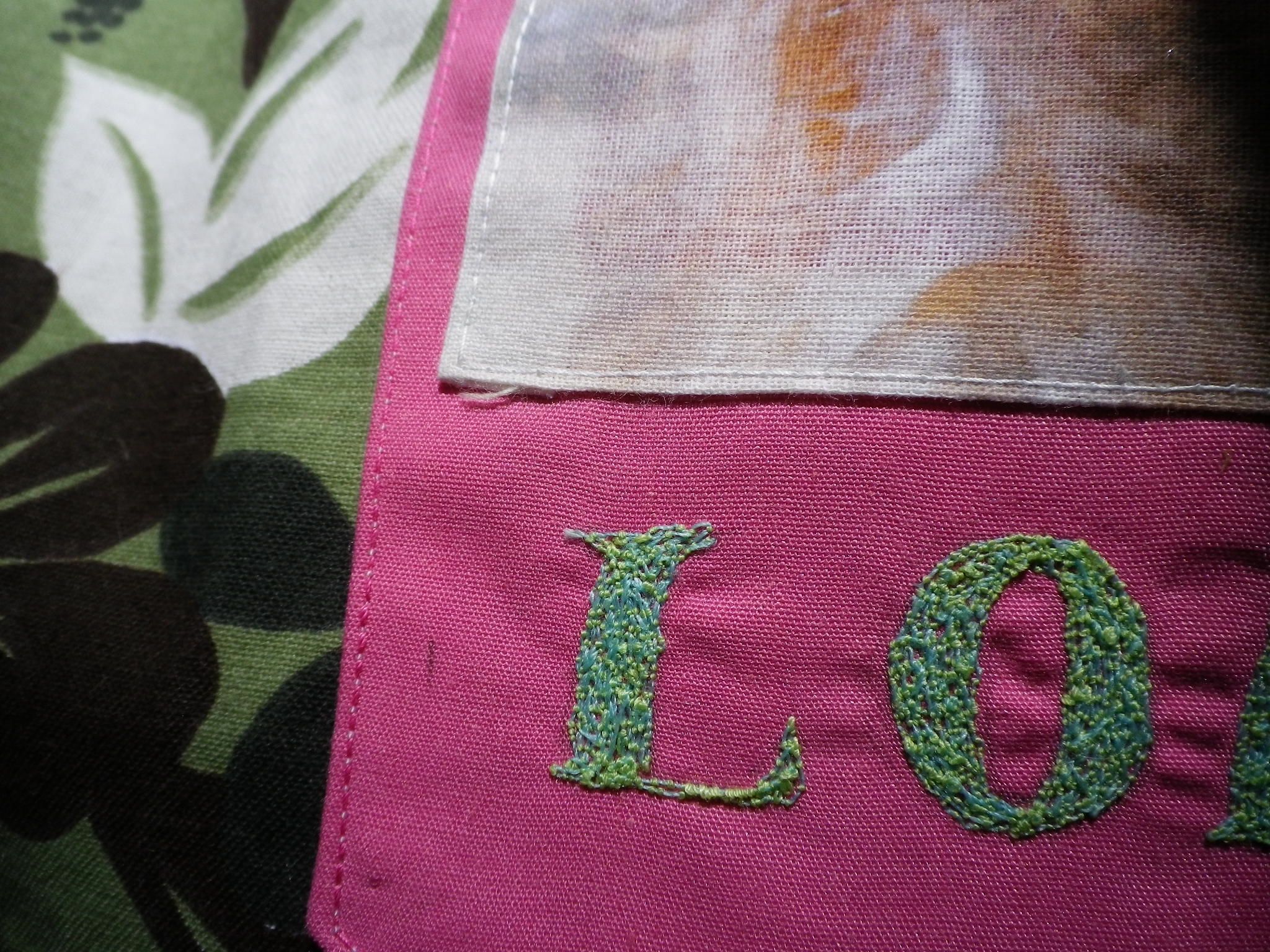
First I have to say that there will be no Dog Training on the 1st and 8th September. One of the reasons is that Lola and I will be on a dog activity camping holiday. We’ll be having a go at tracking, competition obedience, rally obedience, barrel racing, heelwork to music and agility. We will also be camping. Last time we camped I got a bit concerned about Lola being cold in the night as the temperature can drop really suddenly the minute the clouds clear. One change I’ve made is to swap from a body-shaped sleeping bag that made me feel like a caddis-fly larva, to a pod shaped bag which allows plenty of room for us to snuggle up together. My self-inflating mat is really comfortable, but not wide enough to allow room for Lola – she ends up draped over my legs. I found a 24×36 inch offcut of memory foam on Amazon for £12.50, which should be big enough for most dogs. I cut mine to a 2ft square with a serrated knife to fit the pouffe she spends much of the day on. Then it needed a cover. You could use a single duvet cover, but I had some hibiscus fabric donated by a friend and my experiments with printing fabric through my inkjet had yielded an image of Lola. A little bit of free embroidery on the sewing machine and….  Well, Lola likes it.

Bed lola pic

Bed embroidery2

Posted in Uncategorized | Tagged , , , , | Leave a comment

Pug

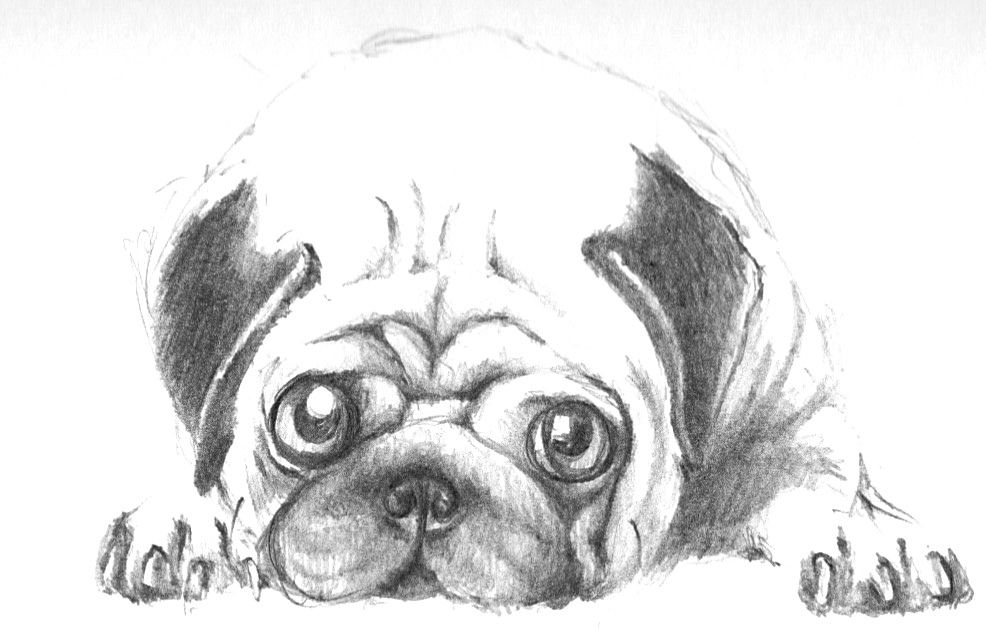
Hip dysplasia (HD) is one of the more common causes of joint pain in dogs. It is usually associated with larger breed dogs such as Mastiffs and German Shepherd dogs, but is also surprisingly common in smaller dogs including Bulldogs, pugs and spaniels.

Hip dysplasia means that the hip socket is poorly formed and does not make a tight smooth fit with the head of the femur (thigh bone). It may be that the socket is too shallow, or an irregular shape, making the joint unstable. This can lead to abnormal wear and tear to the cartilage lining the joint and the hip not supporting the dog adequately. Despite the cartilage attempting to repair itself, a cycle of inflammation, pain and further damage sets in. The dog can suffer anything from mild pain to crippling disability. In order to reduce the pain the dog will attempt to move the joint less, or move both back legs together resulting in a bunny hop, especially when climbing stairs. Dogs suffering pain may also find it difficult to get up from sitting or lying down, suffer stiffness which is worse after exercise, or find it painful to be touched in the hip area.

If your dog is diagnosed with HD, your first responsibility is to ensure he is not overweight as weight control will decrease pressure on the joint and reduce inflammation. Therapies such as acupuncture, massage and hydrotherapy can bring relief from pain, reduce inflammation and preserve muscle strength to support the joint.

Nutritional supplements can have a profound effect on a dysplasic or arthritic dogs. Some of the most effective ones are Glucosamine, Chondroitin and Turmeric. Yumove is a supplement made by Lintbells containing Glucosamine, Chondroitin and Green lipped mussel extract. Many dog owners have seen a new lease of life from their elderly, arthritic dogs after using these tablets. An alternative is Seraquin, which again contains Glucosamine and Chondroitin, but also curcumin which is extracted from the spice Turmeric. Curcumin has been found to be an effective antiinflammatory arthritis treatment for humans as well as animals. Turmeric is a bit of a super-food as it is a natural antiseptic, reduces cholesterol and combats parasites such as roundworm. You can simply add the powder to food – about 1/8 to a 1/4 teaspoon per day, for every 10lbs of dog weight. If your dog doesn’t fancy that, mix it into some peanut butter.

Your vet will be able to help with diagnosis and a treatment plan. It is most likely that non-steroidal antiinflammatories such as Metacam can reduce pain to preserve your dog’s quality of life but it is possible that surgery may help. Whichever course you choose, give it enough time to work. Cartilage does not have a blood supply and repairs very slowly. Allow at least 6 weeks before deciding whether the therapy you have chosen is the right one for your creaky canine pal.

Posted on by malable | Leave a comment

Local and special vets

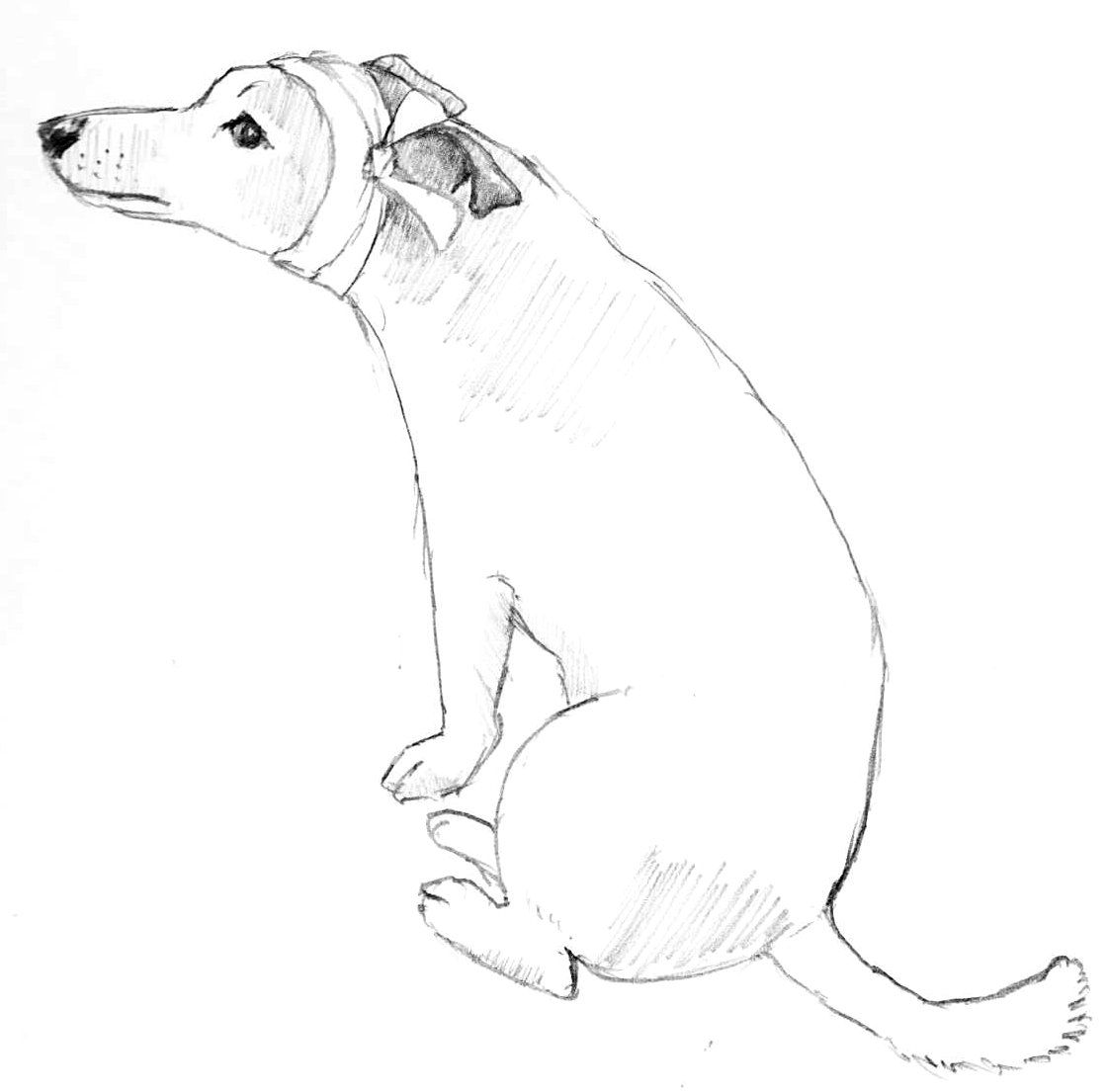
Bandage dogThe majority of us use whichever vet is closest and most convenient, unless at some point some more specialist service is required. The nearest Veterinary Clinic is Goddards on Kennington Road, part of a group which has clinics throughout London. Out of hours service is provided by  Stone Lion Veterinary Hospital in Wimbledon.

Only slightly further away is Andrew Kirby Vets on Grange Road, which is also open on Sunday mornings. In an emergency they advise that you call the surgery first to let staff know you are coming. Emma Styles runs a clinic from 10am to 2pm each Tuesday and on some Thursday evenings offering acupuncture, Tui Na massage and Chinese herbal medicine. It’s best to contact her directly for information or an appointment.

Visiting the vet is often a highly stressful event for both pet and owner. TV vet Bruce Fogle comes highly recommended by a number of dog owners who needed a more tailored approach to annual vaccinations. His manner in dealing with people and pets is warm and he is responsive to individual requirements. Bruce works from The London Vet Clinic in W1 which boasts a number of specialists in areas such as Dermatology and Diagnostic Imaging.

For those who would like to try a herbal approach to pet care Barrier Animal Care Clinic in Charlton SE7 offer a monthly clinic with Veerle Dejonckheere who is qualified to treat animals using Acupuncture or Herbal Medicine.

Posted in Uncategorized | Tagged , , , , | Leave a comment

Recommended Books

There are lots of great dog books out there, these are just some that I’ve found useful.

The first one I bought, before my first puppy, was The Perfect Puppy by Gwen Bailey. It answers a lot of basic questions about things like house-breaking and avoiding biting and aggression. It’s a very reassuring book for new puppy owners and covers just about every problem that may come up. There’s even a socialisation programme right at the back, because exposing puppies to new people and places is vital for producing a confident dog. I didn’t read it cover to cover but dipped into the relevant parts and it was good to have on hand as a reference. There are lots of great photos in there – one of the puppies used is a Huskie who used to visit GMH Park.

An interesting free resource is a pdf by Dr Sophia Yin – Lucy Learns to Earn. This is a set of instructions written for her father to train his new puppy. It is well illustrated and gives a step-by-step guide to potty training, crate training and basic good manners. The ideas are expanded in her book Perfect Puppy in 7 Days (Kindle edition) along with information on puppy body language and how they develop before they come home with you.

On days when bad weather makes dog walks less appealing, a good way to engage with your dog and tire her out is to teach a trick or two. 101 Dog Tricks by Kyra Sundance shows you how to train a wide range of tricks and tells you what to do when things don’t go to plan. You may not need to be told how to get your dog to shake hands, and she’ll probably never need to imitate a hockey goalie, but your dog will learn something you can both be proud of.

A classic of dog training theory and practise is Karen Pryor’s Don’t Shoot The Dog. It provides a thorough explanation of behavioural training that can be used to train animals or people. The book isn’t very big, but it’s densely packed with information about operant conditioning and how dogs (and people) learn. I keep going back to re-read bits because there’s such a lot to take in. All of the jargon of modern dog training is explained along with the mechanics of how to go about changing your dog’s behaviour. It’s just a pity that my copy met a flask of hot coffee in the bottom of my bag before I got a chance to read much of it.

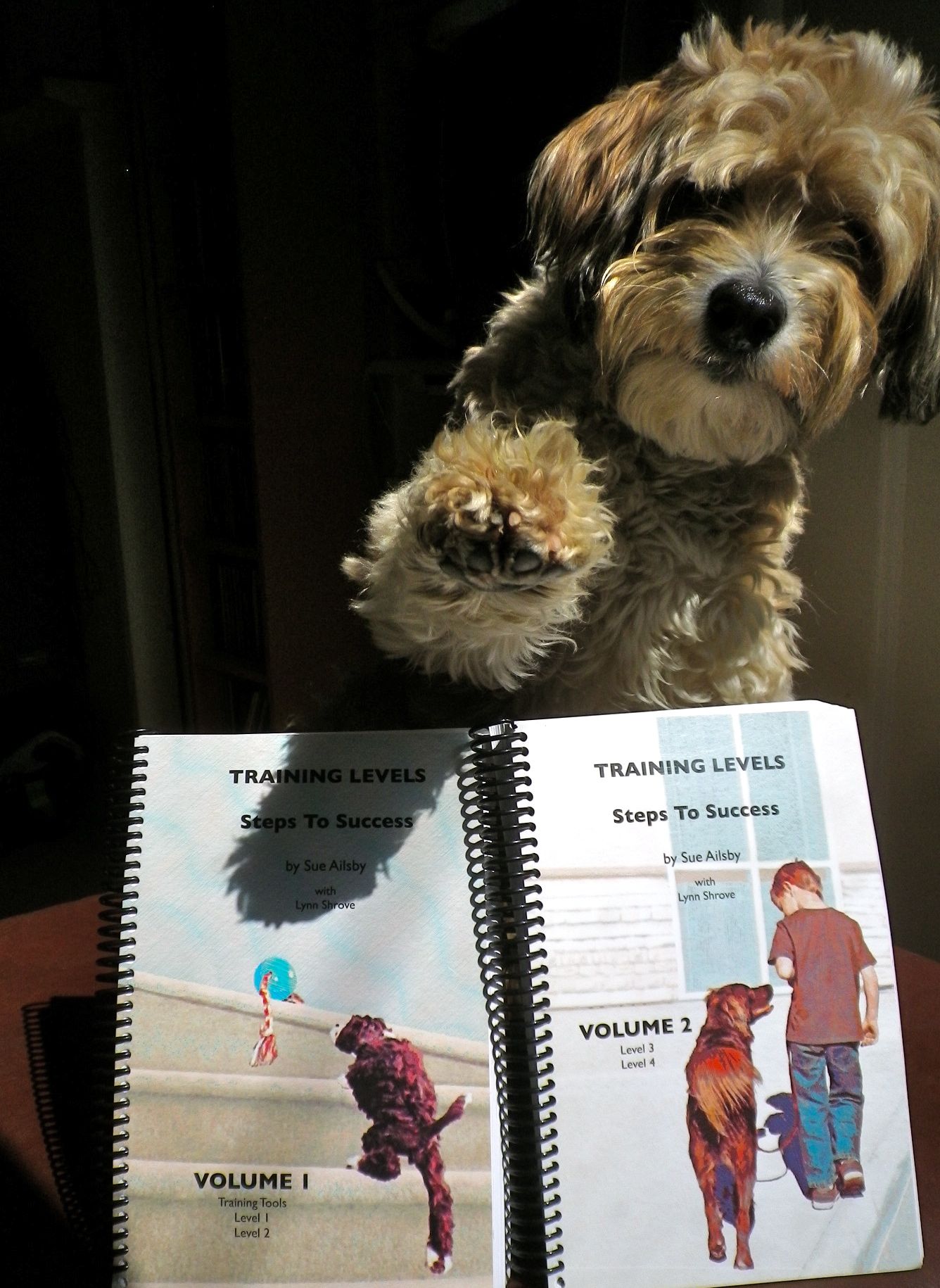
These are some of the first books I bought – along with Sue Ailby’s manuals mentioned in an earlier post. I’ll post up a few more when I have time.

Posted in Uncategorized | Tagged , , | Leave a comment

Some Background

Training Levels Lola

The classes are based on a dog training manual written by Canadian trainer Sue Ailsby (known as Sue Eh?). I came across her writing while trawling the internet looking for any information on dog behaviour, development and aggression, following the sad passing of my puppy Noodle. I found an article called “A Crateful of Teeth” which led me to Sue’s website. I was very lucky to stumble across her writing at this stage as it led me down the route of operant conditioning – a scientifically proven training method which makes learning fun, fast and stress-free for the dog. Sue’s articles are both entertaining and inspiring, but even better, she has made a whole training programme available for free. Any dog owner can follow this well thought out and comprehensive set of instructions a foundation of behaviours which can lead to any dog sport, or simply an easy to live with family pet.

On their own, the instructions could be a challenge to follow, but support is available in the form of a yahoo group. Members of the group are encouraged to video clips of their training sessions, and any problems encountered, and post them on Youtube for feedback. Some of the other group members are excellent trainers in their own right and have many years of valuable experience to offer. Their advice has led me to other fabulous trainers and useful books which I’ll list in another post.

Posted in Uncategorized | Leave a comment